Saturday, 2 November 2013

Yellow and Fire

A slow morning pleasantly ticked over with guest ringer Mick Netherwood joining us for a session at Durlston.
Mick N is no stranger to the area as he Mick C used to visit regularly throughout the 1980's and 90's - ringing with the group further up the coast at the renowned Chapman's Pool.

This morning he seemed to serve as a lucky charm as although we didn't catch a great deal on quantity we more than made up for this with superb quality.

First to come out of the new picnic ride was a fantastic Firecrest. First of the autumn for Durlston, so always nice to see.

The pointed, tipped outer tail feathers and deep orange feathers within the crest identified this Firecrest as a 1st calender year male
This was shortly followed by Gryllo popping back from the same net ride half and hour later and calling us all over to make wild guesses for what he had in his bag.
To our delight i safely pulled a Yellow-browed Warbler out of the bag!
Although this species is a fairly regular visitor to Durlston, this was the first one ringed and not before time judging by the number seen throughout the country this autumn.

The long awaited Yellow-browed Warbler
The rest of the morning's totals were made up of Goldfinch, Robin, Dunnock and Wren.
Whilst general birding included Goldcrest, Firecrest, Redwing, Starling, Redpoll, Goldfinch, Brambling, Siskin, Linnet, Meadow Pipit, Sparrowhawk and Kestrel.


Throughout the later part of October the group continued to ring at Durlston, catching the usual fare of Chiffchaff, Blackcap, Swallow and Goldfinch that made up the majority of mornings - the later two species have been particularly numerous, such as on on 15th October when a day total of 227 was reached.

Posted by Simon Breeze

Sunday, 20 October 2013

A brief analysis of Grasshopper Warblers ringed at Lytchett Bay 2004 - 2013


Ringing has occurred every summer in the reed beds around the north-west shore of Lytchett Bay since 2004.

Grasshopper Warbler is an uncommon migrant and rare summer visitor to Dorset. However its perceived occurrence on autumn migration is strongly influenced by a combination of its habitat choice and unobtrusive behaviour. It is generally silent and remains hidden in dense vegetation or long grass.

126 Grasshopper Warblers were ringed between 20th July and 2nd October during the ten year period. In the same period there have only been 5 field sightings.

The annual distribution is shown in Fig 1


 Over the period the ringing method has remained largely unchanged, though the number and location of nets have varied to a small degree. The song of Grasshopper Warbler is played via a cassette and speakers, on a mixed tape with Aquatic Warbler song, from 45 minutes before dawn until 08:00.


Ringing was undertaken on 134 dates between 20th July and 31st August over 10 years, the peak migration period for Grasshopper Warblers. At least one bird this species was ringed on 54 dates (40.3%). In addition ringing occurred on 33 occasions in September. At least one bird was ringed on 7 dates (21.2%). 1 Grasshopper Warbler was caught in Oct, on the 2nd in 2010.

The pattern of occurrence between the 20th July and 4th October is shown in Fig 2


Only one of the Grasshopper Warblers ringed at Lytchett Bay has been recovered. A first year bird ringed on 29th Aug 2007 was taken by a cat 47 days later in Staplehurst, Kent on 15th October. A surprisingly late date for a bird of this species to be in Britain.

Typical of migrant passerines ringed in autumn, the majority of birds trapped were first years. Only 7 (5.5%) were adults.

Birds move on from the area quickly. Only 2 birds have been recaptured on a subsequent date following ringing.

Shaun Robson
October 2013


Sunday, 13 October 2013

A week of autumnal change

Four ringing sessions took place this week at Durlston NNR with a distinct change noted, not only in the weather but in the switch to late autumn birds.
The week began with fairly mild conditions and the recent trend continued of  ringing totals of around 100 birds -  mainly made up of Chiffchaff and Blackcap with the former making up the majority.
Then a session on Thursday saw a drop in numbers with only 23 new birds ringed.
Fast forward to Sunday and a weekend of unsettled weather, fall in temperature and the skies saw a increase in finches and thrushes.
This mornings total bumped up to 54 with the finch arrival noteworthy including 4 species of finch with Lesser Redpoll and Linnet both new for the year.

A warm and glowing sunrise greeted us on Wednesday morning

A lesser Redpoll is new for the year and attractive bird that we are always pleased to see

Several flocks of Goldfinches passed over this morning with 25 lured down 25 ringed 


 Over at Lytchett bay Sean undertook a quiet ringing session with 8 new birds ringed with Cetti's Warbler being the highlight.

Posted By Simon Breeze

Wednesday, 9 October 2013

Larking around at the Dortset Bird Fair ringing demo

The weekend started with a ringing demonstration which attracted over 30 people all curious to come and look at how migrant birds are ringed, aged, weighed and measured and safely released to continue their journey on to their winter residence. Whenever we hold a ringing demonstration we always remind visitors that the welfare of the birds is of paramount importance and without the data gathered from this scientific and enjoyable pastime we would literally reduce our detailed knowledge of birds and their movements and behaviour by a considerable amount.


The usual flow of October migrants continued throughout the morning with Chiff and Blackcap being the most common. 145 and 31 respectively.

Highlight of the morning came just before the group packed away with 2 Woodlark.


Monday, 23 September 2013

Swallows on the move

Mick, Ian and Simon had another busy morning at Durlston, although not for the first three hours when we just ticked over.
 
There was a huge passage of Swallows and a substantial one of Meadow Pipits which were mainly all passing through fairly fast and staying high.
Sample counts of 50 - 100 per minute just over the ringing station. Extrapolate this over the three hours from 7 - 10am when the passage was strongest and you get between  9 and 18,000 birds just over the highest part of Durlston alone.
The Swallows weren't interested in stopping around our nets but we still managed to ring 42.
 
Other than that between 500 and 1000 Meadow Pipits flew east along with a few Goldfinch.
Ringing highlights included a Grasshopper Warbler and a Reed Warbler and there was a notable influx of Blackcaps
 
Total ringed - 125

Thursday, 19 September 2013

Chiff fall

Busy morning for Mick and myself at Durlston NNR
103 new birds with no retraps from just 3 nets caught within a fairly short time frame of 6.30-9.00

Conditions became fairly windy so we shut up the nets as soon as we emptied them. The wind didn't seem to affect the birds as they were heard and seen all around the surrounding vegetation for some time.
Loads of Meadow Pipits also passing over but as we needed to shut the nets to process what we had we didn't get the opportunity to catch and ring any

Totals included

Chiffchaff 79
Willow Warbler 3
Blackcap 18
Whitethroat 1
Robin 1
Wren 1

To date the annual race between newly ringed Chiffs and Willows stands in favour of the later with 622 Willows compared to 175 Chiffs. However as we can see from this mornings total Chiffs are now starting to dominate, so who knows what is yet to come.

Posted by Simon Breeze


Wednesday, 4 September 2013

A Bat, a Beetle and a Goatsucker

Last night (Tuesday) saw Terry and Catherine make yet another visit to Canford Heath where 2 more juveniles Nightjars were caught.


A classic Age 3 wing (a bird of this year)
The plumage being all fresh and the secondaries showing the lovely orange arrowheads at the tips.

A visit on Sunday 1st September also resulted in 1 juvenile, this is 6 juveniles in the last week, with much of the heath not having been covered, suggesting that Nightjars have fledged a good number of young and therefore 2013 being a pretty successful year. This is great news since the last two summers have been so dire, horrendous weather and major lack of insects would have certainly taken its toll on these mystical birds. A proper summer was certainly well and truly called for this year and a tonic for all I think.


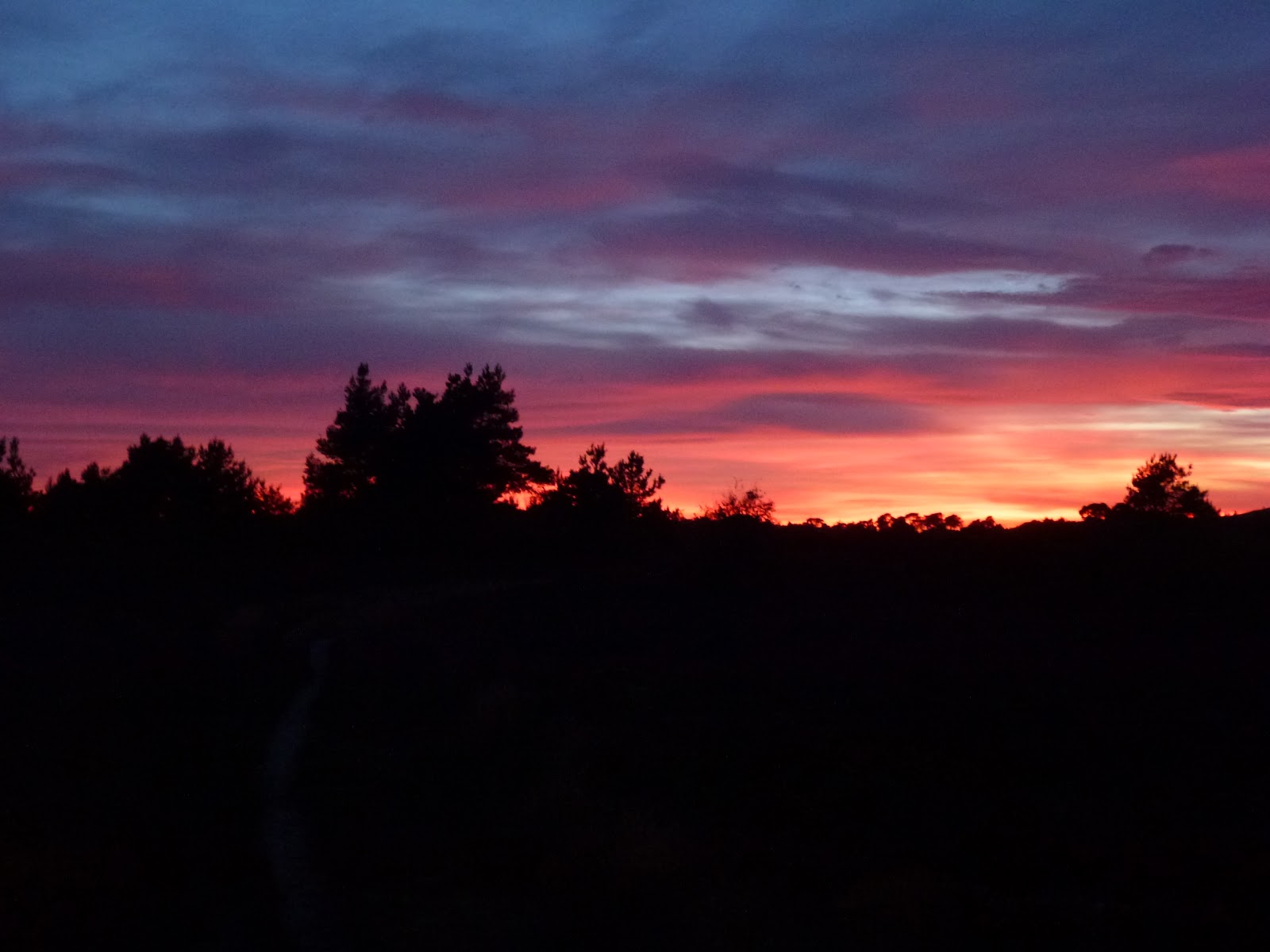
A cracking Sunset over the heath
The night of the 1st also produced a Bat, which looked interesting as was not one of the commoner Bats, a look at the photos the next day identified it as a Bechsteins, a rare Bat indeed and a great record. In addition to this a Beetle was also discovered, that was obviously a Longhorn but was very large and not something we were familiar with. This too was not common, though not rare either, it is called a Tanner Beetle and from literature read, it suggests its confined to the southern part of the UK where it is local, it is the largest of the UK native Longhorn and also one of Europe's stoutest, great stuff and another good record for the heath.


Tanner Beetle (male) one of Europe's stoutest longhorns.